Exploring how our relationship with the living world shapes our personal health
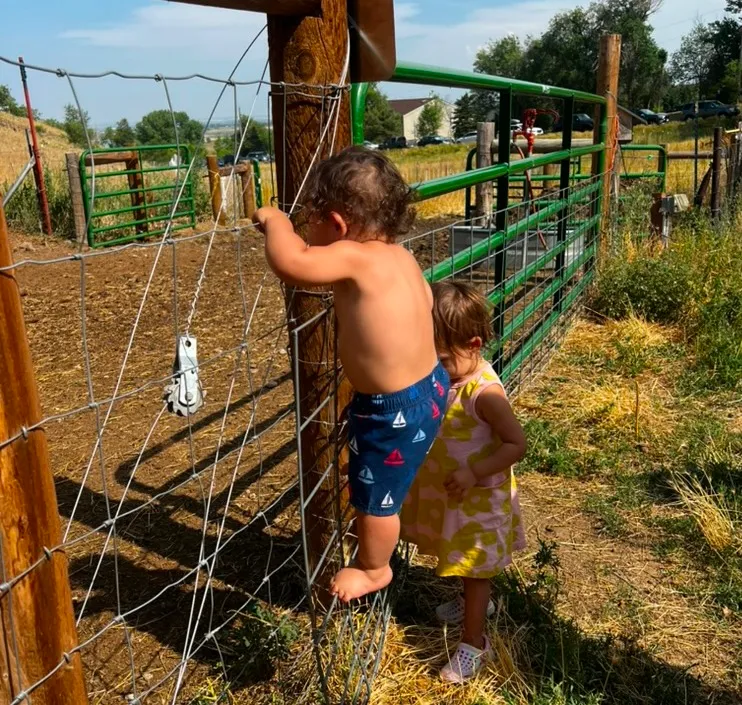
Sitting on a berm along the foothills of the Rockies with a sister last weekend, chewing on some osha root and enjoying a rare moment of silence while our toddlers undoubtedly wreaked havoc below, I realized how rare it has become to eat wild foraged food and medicine directly from the place I live.
While I wholeheartedly admire those who make this a part of their daily life a-la you enjoy life or the wild biome project – the reality for me is a little different. I’m more likely to pick up gramma grass at the farmers market, pair it with lettuce from my garden, and top it off with some nuts and seeds from Costco. My diet might aspire to be local (wild foraged is a stretch these days) but the oils, fruits, and extras that make up my meals still come from faraway places I have little connection to.
Why am I starting this letter waxing poetic about my food choices?
A piece of media dropped this week that, while it might seem tangential to the regenerative space, actually sits at the heart of the movement and deserves our full attention in this edition.
The short film Waska, released by The Guardian, explores the unintended consequences of the West’s fascination with ayahuasca, a vine native to the Amazon with powerful healing and psychedelic properties. As the neo-shamanism movement has taken off, the West has embraced this plant for its ability to foster connection – to self, spirit, and nature.
But here’s the tension: many of us (myself included) have partaken in this medicine completely out of context – physically, culturally, spiritually. We extract value from it, often for personal healing or expanded consciousness, and then move on. No relationship to the land it came from. No responsibility to the people who steward it.
When we bolt the concept of regeneration onto extractive systems that lack a relationship to place, we undermine its true potential.
If that feels too abstract, think of your own body. Your health isn’t just about what you eat – it’s about the environment you are immersed in. As Wendy Johnson pointed out on a recent podcast, 80% of our health is determined by external factors. We’re ecosystem creatures. And this too, is why the Sarayaku people use ayahuasca, to understand how to live in right relationship with their environment.
Now, I’m not suggesting we all go live barefoot in the forest and forage everything we eat. My daughter loves GoodSam pineapple chips too much for that. But it’s becoming clear that ‘eating locally’ is more than just a sustainability story, it’s about rebuilding our own food culture, connecting us to place and holistic nourishment.
So, why does this matter to the viability of the regenerative agriculture movement?
Because relationships are what makes this movement unique. Forget the soil carbon metrics for a moment – regenerative agriculture isn’t some shiny new concept we dreamed up to save the world from industrial food. The industrial food system is the recent detour. Regenerative practices are rooted in a much older philosophy – one that Indigenous communities have followed for millennia, building health and abundance through deep, reciprocal relationships with the landscape.
And here’s the kicker: that relational perspective isn’t just ecological or moral – it’s economic. As Anat Shenker-Osorio points out, we have to stop acting like scrappy underdogs in a space where we actually have the upper hand. Even large-scale farmers are adopting regenerative practices not out of idealism, but because the economic outcomes are superior.
The point is: if we try to ‘scale’ regenerative agriculture using the same extractive logic that broke the system in the first place, we’ll just end up chasing our own tail. But if we root this work in relationships – to place, to people, to history – we stand a chance at nourishing our children for generations to come.
I’ll leave it there for this week, I hope you enjoy our curated news selection. Big thanks to all the writers featured and to you, the reader, for being in this conversation with me.
With gratitude,
Paige
Curated news, sizzling op-eds, and our latest podcast episodes every 2 weeks straight to your inbox.